CETC, an active player in the Belt and Road (B&R) Initiative
Satellite Attitude Control Actuators
Reaction Wheel / Momentum Wheel
CETC's compact, integrated electromechanical reaction wheel is consisting of a precision rotor (flywheel), brushless motor, bearings, housing, and drive/control electronics. These reaction wheel assemblies operate on the principle of conservation of angular momentum: changing the rotor's spin rate produces a reaction torque that rotates the satellite body in the opposite direction. This enables precise 3-axis attitude control without propellant.
CETC's high cost-performance, standardized "off-the-shelf" reaction wheel units are optimized for commercial and small/microsatellite platforms, covering satellites from roughly 1 kg scientific CubeSats up to ~2-ton class platforms. CETC's characteristic designs include lightweight construction, low micro-vibration, high reliability, long operational life, and electromechanical integration. CETC has accumulated substantial flight heritage, with thousands of units delivered and operating on hundreds of satellites.
CETC's spacecraft/attitude-control reaction flywheels are designed primarily for satellite attitude determination and control systems (ADCS/ACS). Typical uses include:
- 3-axis fine pointing and stabilization for Earth-observation, remote-sensing, and meteorological satellites
- Precise orientation for communication, navigation-augmentation, and scientific-experiment platforms
- On-orbit attitude maneuvers, momentum management, and desaturation support (often paired with magnetic torquers)
- Commercial small-satellite constellations and microsatellite buses that prioritize low mass, power efficiency, and rapid production
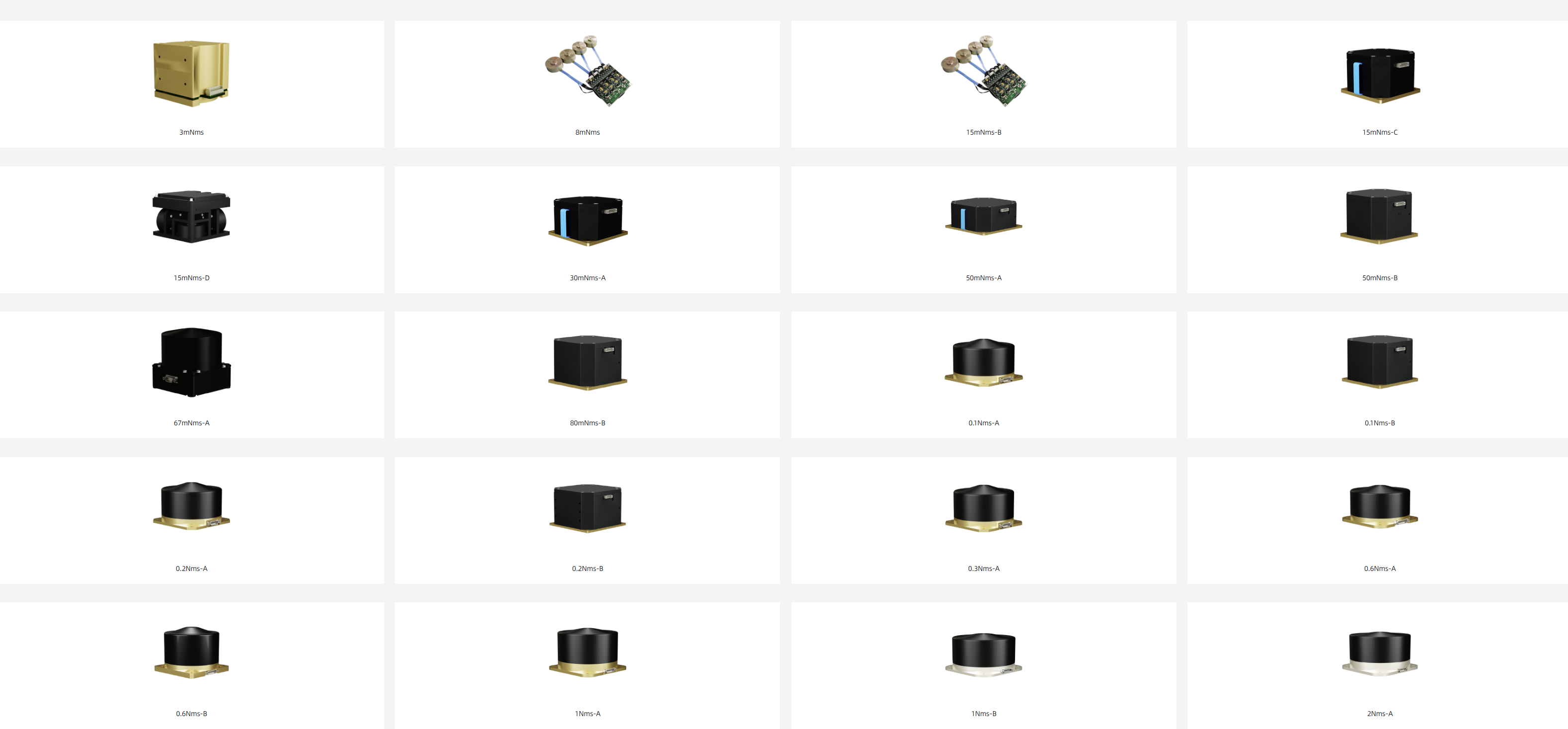
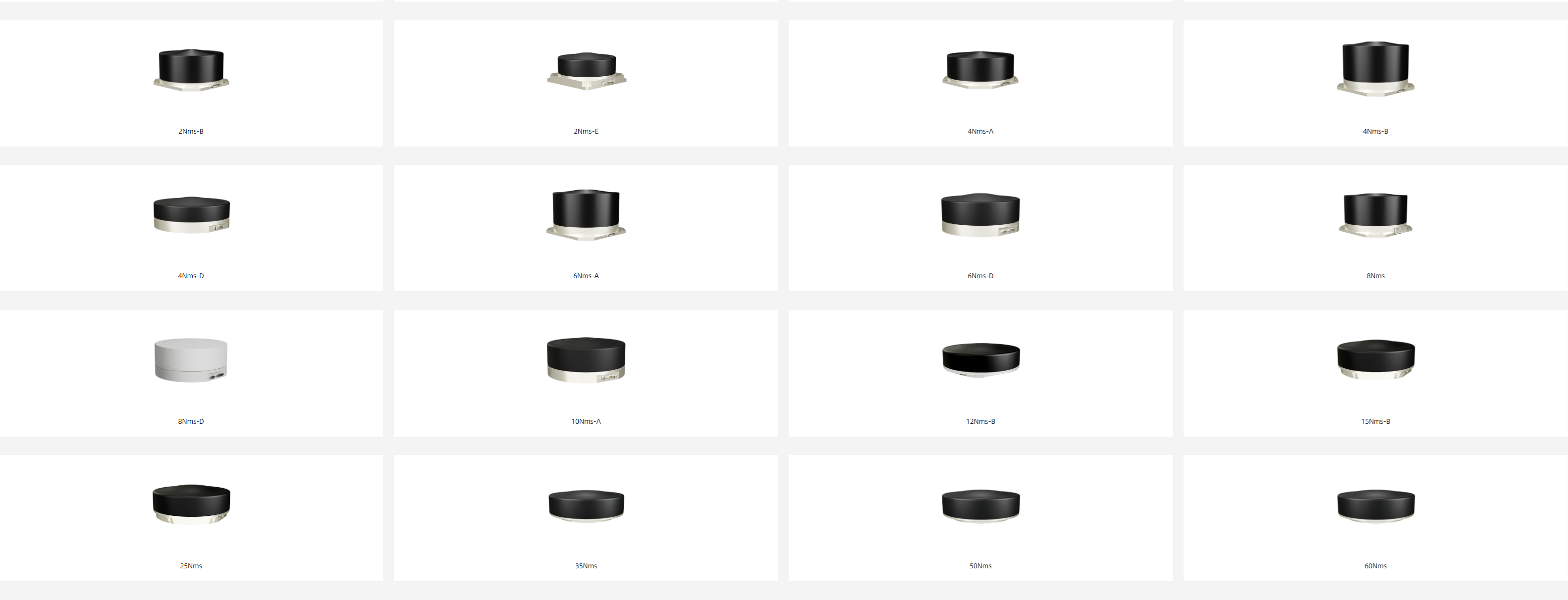
CETC's reaction wheel product matrix covers a vast spectrum from micro-nano satellites to medium-to-large spacecraft platforms, offering highly modular, high-precision, and reliable attitude control solutions.
- Angular Momentum & Torque: Maximum angular momentum ranges from ≥3mNms to ≥60Nms, distributed in a fine-grained stepped matrix. Maximum control torque scales from ≥0.00045Nm to ≥0.2Nm. Notably, the 12Nms-B model is specially designed for low-speed/high-torque applications, delivering up to ≥1Nm at 1300rpm.
- Control Precision: The entire series maintains exceptional consistency. Current control precision is superior to ±1mA, and torque control precision is superior to 2%. Speed control precision tightens from ±5rpm (micro models) to ±1rpm (models ≥0.1Nms).
- Operating Voltage: 12V for micro/small models (3mNms to 80mNms). 28V for medium models (0.1Nms to 12Nms). 42V for heavy-duty models (15Nms to 60Nms).
- Power Consumption: Static power scales from ≤0.3W (micro) to ≤4W (heavy). Vacuum steady-state power (at 3000rpm) ranges linearly from ≤0.7W to ≤12W. Peak power spikes with high torque output, reaching up to ≤180W.
- Interfaces: Highly standardized, CAN & RS422 interfaces.
- Size & Mass: Spans from ultra-lightweight 37×37×37mm (0.08kg) for pico-satellites to Φ330×108mm (11.2kg) for large platforms.
- Environment & Life: Highly standardized environmental resilience with an operating temperature of -20~+50°C and a design life of ≥7 years across all units.
- Product Tier Classification: Micro/Nano Tier (3mNms - 15mNms): 12V supply, ultra-lightweight (<0.2kg), extremely low power, ideal for CubeSats/Pico-sats. Medium Tier (30mNms - 12Nms): 12V or 28V supply, mass ranging from 0.6kg to 5kg, balancing maneuverability and power. Heavy-Duty Tier (15Nms - 60Nms): 28V or 42V high-voltage supply, mass from 7.2kg to 11.2kg, delivering high control torque for large spacecraft or high-maneuverability platforms.